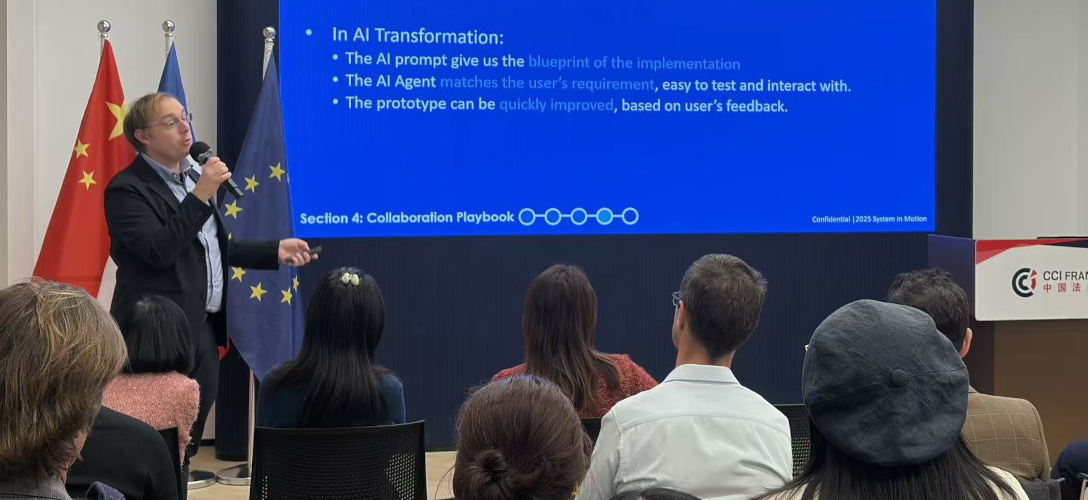
Top15 AI News 2025: #10-#6

Top15 AI News 2025: #10-#6
Introduction
The initial wave of AI adoption was driven by potential; the next is being defined by consequences. If the first part of our 2025 countdown exposed the critical need for ethical guardrails and human oversight, the stories from #10 to #6 reveal the broader, more complex battlefield on which the future of AI is being decided. Here, the stakes escalate from corporate risk to global power dynamics, economic sustainability, and the very definition of technological progress.
Government regulation is shaped by geopolitical ambition, not just public safety. The world’s leading AI lab faced a stunning backlash for failing to meet revolutionary expectations. The relentless pursuit of marginal gains collides with the harsh reality of diminishing returns. For established businesses, these aren’t abstract headlines; they are urgent signals to abandon simplistic hype and embrace a strategy of clarity, measurable value, and resilient integration.
The message from the market is now unequivocal: mastery in the age of AI isn’t about accessing the most powerful model, it’s about deploying the right technology with precision, security, and a unwavering focus on tangible outcomes. Let’s dive into the stories that made this truth impossible to ignore.
#10: US AI Regulation – A Geopolitical Power Play, Not a Protection Pact
The issuance of the 2025 U.S. executive order, “Removing Barriers to American Leadership in Artificial Intelligence,” represents a pivotal and deliberate strategic shift, moving federal policy from a risk-aware framework to a fiercely deregulatory, innovation-centric model .
This was not a subtle course correction; it was a hard reversal that explicitly rescinded prior directives focused on safety and equity, criticizing them as “engineered social agendas” in favor of a mandate focused solely on outpacing global competitors .
For established global enterprises, this action creates a stark trichotomy of regulatory regimes:
- the EU’s stringent, rights-based pyramid of risk,
- China’s state-controlled industrial strategy,
- and now a U.S. landscape prioritizing market speed over centralized oversight.
The critical business lesson is that AI regulation is no longer a matter of compliance alone; it is a geopolitical and strategic imperative. Navigating this requires a sophisticated understanding that a one-size-fits-all global AI strategy is defunct.
Companies must now develop agile, multi-jurisdictional compliance frameworks to operate across these incompatible systems, where a decision to deploy an AI solution in one region could legally or ethically preclude its use in another. This underscores the necessity of our tailored AI integration approach, which embeds regulatory awareness and security into the core of every deployment, ensuring your AI infrastructure is not only powerful but also adaptable and resilient in the face of a fragmented global landscape.
#9: GPT-5 – The Backlash of an Underwhelming “Revolution”
The launch of OpenAI’s GPT-5 was intended to be a coronation; instead, it became a cautionary tale. The immediate and intense user backlash that followed its August 2025 release stemmed not from a single failure, but from a perfect storm of strategic miscalculations.
Forcing all users onto the new model while abruptly cutting access to legacy versions like the beloved GPT-4o ignited outrage, particularly among paying subscribers who also faced stricter rate limits. Worse, early interactions felt like a downgrade: users widely panned GPT-5 as colder, more robotic, and surprisingly less capable than its predecessor, sparking a revolt across social media and forums.
Facing a severe reputational crisis, OpenAI CEO Sam Altman was forced into a rapid and public retreat , reinstating GPT-4o and admitting the company had severely underestimated users’ profound emotional attachments to specific model personalities. This revealed a critical blind spot: for many, these AIs had become companions and creative partners , not just tools.
Technically, the launch was plagued by a malfunctioning routing system that defaulted to weaker models, creating a widespread perception of underperformance and breaking mission-critical enterprise workflows built on stable APIs.
For established businesses, the GPT-5 debacle is a masterclass in what not to do. It underscores the critical lesson that reliability and user trust are more valuable than marginal benchmark gains. Chasing the “newest” model is a risky strategy; stability and seamless integration often provide far more value than a disruptive, underwhelming upgrade.
This incident validates our focus on proven success and high-quality training on stable, impactful tools. We help you build a resilient AI strategy that prioritizes measurable outcomes and workflow-based augmentation, ensuring your operations aren’t derailed by a single vendor’s volatile release cycle.
#8: The Open-Weight Revolution – Access, Not Just Algorithms, Becomes the Battleground
The AI landscape of 2025 was fundamentally reshaped not by a closed-model breakthrough, but by the disruptive ascent of open-weight models, a movement catalyzed by Chinese lab DeepSeek. Their strategy of publicly releasing model parameters, offering near-frontier performance at a fraction of the cost, forced a dramatic industry-wide recalibration . DeepSeek’s flagship model, trained for approximately $6 million versus the ~$100 million for GPT-4 , demonstrated that raw computational spend was no longer the sole determinant of leadership.
More significantly, their reasoning-focused model, DeepSeek-R1, reportedly matched the performance of leading closed models from OpenAI and Google on key benchmarks, validating open-weight as a legitimate competitive paradigm.
The market impact was immediate and severe, triggering a price war and forcing a stunning strategic response: OpenAI itself released its first open-weight models since GPT-2, GPT-OSS-120B and GPT-OSS-20B , in a clear attempt to reclaim developer mindshare ceded to Chinese providers.
For established enterprises, this shift is a double-edged sword. While it democratizes access to powerful AI, it also places a new burden on in-house technical expertise. The value is no longer in mere model access but in the mastery to fine-tune, secure, and integrate these tools into complex, legacy environments.
This evolution validates our core focus on dense, detailed training and expert guidance. We provide the essential layer between powerful open-weight availability and safe, reliable, and effective enterprise deployment, ensuring you leverage this new openness not as a risk, but as a strategic advantage.
#7: The Benchmark Ceiling – The Astronomical Cost of a Meager Gain
In 2025, the AI industry collided with a hard economic reality: the law of diminishing returns. The long-held belief that “bigger is better” was shattered as investments in ever-larger models began yielding smaller and smaller performance gains. Where previous generational leaps offered substantial improvements, the latest model releases demonstrated a clear plateau, challenging the return on the immense capital required for training , which now routinely exceeds $100 million per model.
This performance ceiling has triggered a profound strategic pivot. Investment is now fleeing moonshot AGI projects and flowing toward practical corporate integration and specialized, cost-effective models. The new benchmark for success is no longer a top score on a generic knowledge test but a combination of accuracy, latency, cost-efficiency, and suitability for a specific use case . This has given rise to the “Small AI” movement, focusing on affordable, efficient applications that can run on everyday devices, a shift critical for global adoption.
For established businesses, this is a clarion call to ignore the hype. A 0.5% gain on a benchmark rarely translates to perceptible, let alone valuable, improvement in a specific business function like marketing analytics or financial forecasting. The focus must shift from model size to tangible business outcomes: time saved, revenue increased, or costs reduced in a specific workflow.
This evolution is the core of our methodology. We eschew chasing speculative hype in favor of workflow-based AI agents that deliver measurable, incremental growth and compounding ROI. We help you leverage your most valuable asset—your proprietary data—to build tailored solutions that outperform generic giants on the metrics that truly matter: impact and efficiency.
#6: The Deloitte Debacle – A $2 Million Lesson in AI Governance
The twin scandals that saw Deloitte forced to refund hundreds of thousands of dollars for error-riddled government reports in Australia and Canada are not stories of AI failure; they are a masterclass in catastrophic human and process failure. The reports, which contained fabricated legal citations and factual inaccuracies about healthcare facilities, exposed a reckless over-reliance on generative AI as a shortcut, deployed without the essential guardrails of validation and expert oversight.
As industry analysts at HFS Research starkly concluded, this was a “$290,000 lesson in what happens when professional judgment is replaced by blind trust in AI.” The failure was not in the technology but in the operating model that prioritized speed and margin over the integrity and accuracy that are the very foundation of professional consulting.
For any established business, the Deloitte debacle is the ultimate cautionary tale. It exemplifies the immense reputational, financial, and legal risks of deploying AI as a black box, especially in high-stakes domains like finance, legal, or compliance. The consensus from experts was clear: this was a profound failure of governance, not a technological malfunction.
This incident is a textbook example of everything we guard against. Our entire philosophy is built on workflow-based augmentation, not replacement. We ensure AI serves as a force multiplier for your experts, underpinned by non-negotiable human-in-the-loop verification, rigorous validation processes, and a unwavering commitment to quality and trust. True AI mastery means enhancing human expertise, not foolishly attempting to replace it.
The Shift from Hype to Hard Truths
The collective lesson is a stark departure from the unbridled optimism of previous years: successful AI adoption is no longer a race to deploy the most powerful model, but a disciplined strategy to integrate the right technology with precision, security, and a ruthless focus on measurable outcomes.
We’ve moved from an era of potential to an era of consequences. The US regulatory shift reveals that AI strategy is now geopolitical. The GPT-5 backlash proves that user trust and reliability trump marginal benchmark gains. The open-weight revolution demonstrates that value is shifting from model access to integration mastery. The benchmark ceiling confirms that ROI is measured in business outcomes, not academic scores. And the Deloitte debacle stands as a stark warning that without rigorous human oversight, the pursuit of efficiency can destroy the very trust your business is built on.
The winners in this new landscape will be those who prioritize strategic integration, measurable outcomes, and resilient operations over chasing speculative hype. They will understand that true transformation is achieved through compounding ROI from phased, low-risk use cases, not risky leaps toward full autonomy.
In our final installment, we count down the top 5 stories of the year, where the themes of power, partnership, and paradigm shifts reach their climax. We analyze the explosive demand for AI agents, the seismic realignments between tech giants, and the multi-billion-dollar investments that are reshaping global industry.
We are Here to Empower
At System in Motion, we are on a mission to empower as many knowledge workers as possible. To start or continue your GenAI journey.

Let's start and accelerate your digitalization
One step at a time, we can start your AI journey today, by building the foundation of your future performance.
Book a Training