
How we Won the French Tech AI Hackathon
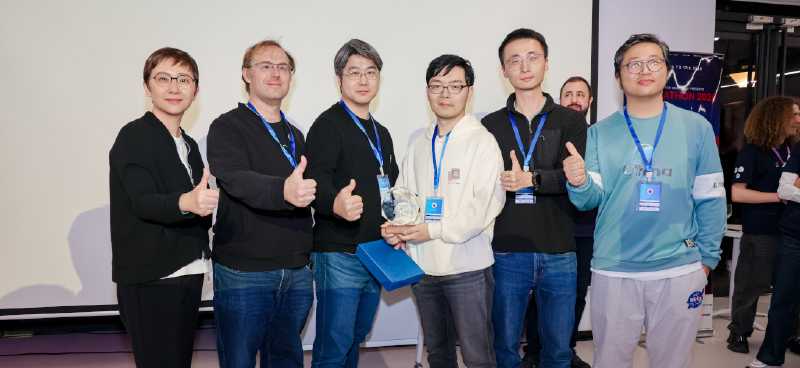
How we Won the French Tech AI Hackathon
A Test of True AI Mastery
The clock struck 4:00 PM on January 16th, and the digital gates opened. For our team at System in Motion, and for six other ambitious teams, the 2026 French Tech AI Hackathon had officially begun. The challenge was a complex, real-world problem from L’Oreal China. The mission was clear — yet immediately intimidating: scale the training of thousands of Beauty Advisors across a market as vast, fragmented, and fast-moving as China.
As we listened to the brief, one thing became obvious very quickly: this was not a problem that could be solved with a traditional software mindset. The sheer complexity of the workflows, the diversity of users, and the pace at which knowledge evolves meant that a classic UI-heavy application would likely collapse under its own weight.
Our architect, Wang Zebin, made an early and decisive call that shaped everything that followed. We would not build complex screens, dashboards, or predefined user journeys. Instead, everything would happen inside a chat interface. This radical simplification freed us to focus on what truly mattered: designing AI Agents capable of collaborating intelligently inside a sophisticated workflow.
This wasn’t a theoretical exercise. It was a 24-hour pressure test with 140 participants and 23 teams working on challenges from industry giants like Danone, Safran, and Forvia. For us, however, this hackathon was more than a competition. It was an opportunity to demonstrate publicly our core belief: true AI mastery is not about flashy interfaces, but about architecting systems that augment human intelligence in the real world.
We chose L’Oreal’s challenge because it perfectly encapsulated the transformative gap we bridge. The problem wasn’t merely information delivery; it was the chasm between a Beauty Advisor who has learned a product script and one who has mastered the art of the consumer engagement. This gap represents millions in lost potential, a classic, scalable operational challenge that begs for an intelligent, systematic solution.
As we read the data and materials provided by L’Oreal, we didn’t just see a training problem. We saw a complex workflow. A perfect candidate for one of the expertise we bring to our clients: secure, multi-agent AI systems designed to augment human potential. The hackathon floor buzzed with energy, but our focus turned inward, to a simple, driving question: how can we architect and deploy a complete, working prototype of such a system in 24 hours?
This is the story of how we did exactly that. It’s the story of Eclat, a solution born from equal parts cutting-edge technology, profound business understanding, and a relentless focus on the human element.
1- Challenge - Scaling Human Excellence in a Giant Market
To understand the scale of our victory, you must first grasp the magnitude of the problem. L’Oreal’s challenge, titled “BA AI Coach: Empowering Beauty Advisors from ‘Learning’ to ‘Mastery’,” was a microcosm of the modern enterprise dilemma: how to achieve personalized excellence at an industrial scale.
The Stakes
In the fiercely competitive beauty retail industry of China, a Beauty Advisor (BA) is the critical touchpoint. Their ability to convey nuanced product information, handle diverse consumer personalities, and master sales techniques directly translates to brand loyalty and revenue. Yet, with a vast and ever-evolving portfolio of brands and products, traditional training models were breaking down. Classroom sessions offered limited practice, and the gap between a training module and a real, unpredictable customer conversation was vast. BAs were informed, but not empowered. They had knowledge, but not fluency.
Our Lens: Seeing the Systemic Hurdle
During the first hours, the challenge felt deceptively simple on the surface, but brutally complex underneath. The more we discussed it, the clearer it became that traditional training approaches — and even traditional AI approaches — were bound to fail at this scale.
While the brief asked for an AI coach, we immediately looked deeper. The core issue wasn’t just the lack of a practice tool; it was the unsustainable content creation engine behind it. What L’Oreal was facing was not just a training gap, but a structural knowledge problem: how to decompose expertise, recombine it endlessly, and adapt it to millions of unique conversations.
- How does a headquarter efficiently create thousands of relevant, up-to-date, and localized training scenarios?
- How do you capture and institutionalize the “unwritten” best practices of top-performing advisors?
- How do you ensure training is not a one-time event but a continuous, adaptive loop?
This is where our positioning as a leader in AI integration for existing companies shaped our approach. We didn’t see a greenfield for a simple app. We saw a legacy ecosystem of training materials, brand guidelines, and human expertise that needed to be intelligently connected and automated. The solution couldn’t be another siloed tool; it had to be a secure, scalable platform that amplified existing assets.
Solution Vision
The constraints were telling: the solution had to support natural language, be cost-effective for mass deployment, and enable fragmented, “anytime, anywhere” learning. These weren’t hackathon afterthoughts; these were the precise, real-world requirements of a global corporation. They demanded a solution that was not just innovative, but operationally viable, reliable, and secure.
This framing transformed the challenge. It was no longer just “build an AI coach.” It was: “Architect a knowledge ecosystem that can autonomously generate, refine, and deliver personalized mastery training to tens of thousands, within the strict data and cost parameters of a multinational enterprise.”
With this clarified vision, our team moved from understanding the problem to architecting the solution. We knew a simple chatbot would be insufficient. The answer, we believed, lay in a sophisticated orchestra of specialized AI agents, a true embodiment of the workflow-based AI automation we champion.
2- Strategy - Where Architectural Ambition Meets Business Insight
With the problem framed not as a singular gap but as a systemic challenge, our strategy crystallized. In the frenetic energy of the hackathon, where the temptation is often to build the fastest, flashiest demo, we made a deliberate choice: we would build a complete, enterprise-grade system in miniature.
Rejecting the Quick Fix: The Multi-Agent Imperative
We immediately dismissed the approach of a monolithic, single-model “chatbot coach.” Such a solution would be brittle, difficult to scale, and incapable of handling the nuanced, multi-stage workflow of professional training. Instead, we embraced the core principle behind our AI Platform for existing companies: complex business processes are best automated by a coordinated system of specialized agents, each an expert in a discrete task.
This wasn’t just a technical preference; it was a business necessity. A training flow involves assessment, goal setting, scenario generation, interactive practice, deep feedback, and knowledge reinforcement. A single AI trying to do all this would be a master of none, providing shallow, generic interactions. Our vision was a team of expert AI agents, a digital reflection of L’Oreal’s own training department, working in concert to guide a Beauty Advisor from novice to mastery.
The Twin Pillars of Our 24-Hour Sprint
Our execution rested on two pillars that define our client engagements, but first, we had to find our foundation.
The Conceptual Breakthrough: Finding the “One Thing”
The first six hours of the hackathon were spent almost entirely on conceptualization. No code, no demos — just whiteboards, debates, and repeated attempts to define what objects we were actually manipulating.
We explored several directions: skills, evaluations, exercises, scenarios. Each seemed plausible, yet none felt fundamental enough. After multiple rounds, Chen Shijun, our analyst, and I — the two who would be pitching the next day — regrouped and made a second critical decision: our entire system would revolve around a single core object. One. And only one.
We realized that skills were too coarse. What we really wanted to work with were small, atomic pieces of knowledge — fragments that could be combined, evaluated, refined, and reused endlessly. Generative AI excels at reorganizing knowledge. This insight quickly became central: our agents would all manipulate this same object, each in a different way, to collectively support the Beauty Advisor.
The concept felt so elegant and structurally sound that it demanded a name. We called it a “Shard” — a small fragment of knowledge that could reflect, refract, and combine into something much greater. Naturally, the application itself followed. A collection of Shards forms a Crystal. And so the project became Eclat — Un éclat de cristal. A system where mastery emerges not from monolithic content, but from the intelligent assembly of countless fragments.
Technical Ambition & Precision
With our core concept defined, we committed to building a fully functional multi-agent prototype on a secure, compliant infrastructure. This meant architecting clear communication channels, data handoffs, and a cohesive user experience within an impossible timeline. It was a high-risk, high-reward move to demonstrate that our methods aren’t theoretical, they are executable under pressure, delivering proven success in real-time.
This strategic foundation, a secure multi-agent platform fueled by a self-replenishing knowledge engine, set the stage for what we would build. We were no longer just participants; we were architecting a vision of AI-powered transformation tailored for the precise needs of an established global leader.
3- Introducing ‘Eclat’ - The Architecture of Glowing Intelligence
With our strategy and core “Shard” concept defined, we began to build. The result was ** Eclat**, a name chosen for its dual meaning. In French, eclat signifies a brilliant glow or success, the radiant confidence of a master Beauty Advisor. In gemology, an eclat is a shard or fragment, the very embodiment of our modular knowledge units. This duality perfectly captured our vision: assembling precious fragments of knowledge to create a glow of mastery.
The Core Innovation: The “Shard” System
The “Shard” was the conceptual breakthrough that moved Eclat from a simple practice tool to a scalable knowledge ecosystem. We designed a system where:
- Knowledge Mining: AI agents could analyze successful customer interactions, training transcripts, and product updates to propose new candidate Shards.
- Human Polishing: Training instructors review, refine, and brand these Shards, ensuring quality and compliance, the essential human touch in the AI loop.
- Dynamic Assembly: The Role-Play Scenario Generation Agent dynamically stitches relevant Shards together, creating personalized, context-rich practice scenarios for each BA. This solved L’Oreal’s critical challenge of creating fresh, relevant training content at scale.
The Agent-Based Architecture: A Symphony of Specialized Intelligence
Eclat was built on a secure infrastructure where distinct AI agents, each with a clear mandate, collaborate seamlessly. This is the practical application of automating low added-value tasks with workflow-based AI Agents.
Shared Services Layer (The Foundation):
- Training Flow Orchestrator: The conductor of the experience, guiding the BA through their learning journey.
- Objectives & Progression Manager: Sets personalized goals and tracks mastery over time.
- Knowledge Base: The secure repository of all polished Shards and product information.
Specialized Agent Layer (The Experts):
- Welcome Agent: Onboards the user and sets the tone for practice.
- Objectives Agent: Collaborates with the BA to define the focus of a session.
- Assessment Agent: Administers quick quizzes to gauge knowledge retention.
- Role-Play Scenario Generation Agent: The creative engine, using Shards to build tailored customer scenarios.
- Role-Play Agent: The “customer,” engaging in natural language dialogue.
- Deep Feedback & Assessment Agent: The expert coach, analyzing the conversation against brand evaluation criteria to provide structured, actionable feedback.
- Best Practice Collection Agent: The closed-loop learner, identifying successful interactions that can be mined into new Shard candidates for review.
The Human Struggle: Building a Believable Agent
While the architecture was taking shape, the night hours were relentless. Zhang Xiang and Mao Yongjie, our AI automation specialists, spent the night building, testing, breaking, and rebuilding agents in rapid cycles. This is the essence of a hackathon: extreme constraints that force creativity to surface.
The most difficult challenge emerged around the Role-Playing Agent. Our initial idea was overly structured. Once an exercise plan had been defined by upstream agents working with the BA, the Role-Playing Agent was supposed to guide the conversation through pre-planned Shards.
In practice, it failed badly. Conversations felt rigid, unnatural — like talking to an AI desperately trying to force specific sentences. It was technically correct, but humanly wrong.
Early in the morning, we were close to reconsidering the entire flow. And then came a simple, humbling realization: we had forgotten the user.
We didn’t need to control the conversation. We could trust the Beauty Advisor to lead it. The Role-Playing Agent didn’t need a script — it needed a personality. One shaped by Shards (like “concerned about oily skin,” “interested in sustainability”), but not constrained by them. Once we removed those constraints, everything clicked. The conversations became fluid, credible, and engaging. Other agents — especially the Evaluation Agent — still knew exactly which Shards to assess and score against. Control was not lost; it was redistributed.
This insight opened an even more exciting prospect: users themselves could generate new Shards through experimentation. A virtuous loop emerged — humans and agents learning from each other, continuously enriching the system.
This architecture is more than a hackathon prototype; it is a blueprint for secure, reliable AI agent deployment in an enterprise. Each agent is contained, auditable, and specialized, reducing risk and increasing performance. It demonstrates how to tailor AI integration to combine seamlessly with legacy systems rather than demanding a risky, wholesale replacement.
By the afternoon of the 17th, we had not just a demo, but a working, interactive system. We had proven that a complex, secure multi-agent platform could be conceptualized, built, and validated in a single day. The final step was to present the solution so that the judges recognized the profound business transformation this architecture represented.
4- The Moment of Truth - A Victory for System Thinking
The final hours of the hackathon are a unique kind of crucible. Exhaustion is high, but so is focus. For our team, this phase was not about frantic, last-minute coding, but about precision in communication. We had built a complete system; now we had to compellingly articulate the business transformation it enabled.
The 24-Hour Sprint: From Architecture to Artifact
Our process mirrored the disciplined, outcome-oriented approach we bring to client projects. The cycle was intense but structured:
- Design & Architecture: The first hours were dedicated to whiteboarding the multi-agent workflow and the Shard data model. Clarity here prevented chaos later.
- Build & Integration: Our developers worked in parallel, building the agent services and the orchestration layer on a secure, compliant cloud environment, adhering strictly to L’Oreal’s data governance mandate. Until we reach a Minimum Viable Product.
- Test & Refine: We were not just building for a demo; we were building a working prototype. Each agent was tested, and the handoffs between them were validated to ensure a seamless user experience.
- Pushing Forward: We added features on top of the MVP, one by one, to increase the solution value, as long as time permitted. This proove that the system was scalable and flexible enough to capture more use cases in time.
- Pitch Preparation: We crafted a narrative that moved from the systemic business problem (scaling mastery) to our innovative solution (the Eclat system), ensuring every technical choice was linked to a business outcome.
Twenty-four hours of intense work inevitably create friction. The real human challenge was not technical — it was maintaining cohesion under pressure. Disagreements surfaced, fatigue set in, and opinions clashed. What made the difference was our shared vision. Instead of fragmenting the team, those moments of tension became sources of new ideas. Everyone worked toward the same goal, trusting that what we were building would ship — the very next day, at 4:00 PM. That level of alignment is rare. And it is, perhaps, the most beautiful part of teamwork.
The Decisive Announcement
As the presentations concluded, the atmosphere was one of nervous anticipation. The judging panel, including L’Oreal’s APAC CIO, delivered their feedback. Then came the pivotal statement: “Only one team had built a fully working, multi-agent prototype that addressed the problem as a complete, scalable system.”
In that moment, we knew. The victory was confirmed not by a subjective preference, but by a tangible, objective differentiator. While other solutions offered compelling features, Eclat stood alone as a holistic, enterprise-ready architecture.
This victory was a validation. It proved that our focus on dense, detailed architecture and specialized, workflow-based agents isn’t just theoretical, it’s what delivers winning, transformative results under the most demanding conditions.
5- What This Victory Means for Our Clients
Winning the 2026 French Tech AI Hackathon was a proud moment for our team, but its true significance extends far beyond a trophy. It serves as a powerful, public, and high-stakes case study that validates the core methodologies we bring to every client engagement at System in Motion. This victory is a tangible demonstration of our brand promise in action: empowering businesses with AI mastery through high-quality, proven, and expert guidance.
A Live Demonstration of Our Differentiators
Eclat is not just a hackathon project; it is a working prototype for the solutions we can architect for established companies.
- Dense, Detailed, and Valuable AI Architecture: We didn’t deploy a generic large language model. We engineered a sophisticated system of interacting components. The “Shard” model itself is a framework for creating perpetual, high-value, and manageable training content, turning a cost center into a scalable knowledge asset.
- Specialized AI for Business Functions: Eclat was built for the specific workflows of HR, Training & Development, and Sales Enablement. This victory proves our ability to deeply understand a functional domain and tailor AI agents that augment human expertise within it, whether the function is Marketing, Finance, Legal, or Operations.
- A Platform Built for Existing Enterprises: The architecture respects reality. It’s designed to integrate with and enhance legacy systems, L’Oreal’s existing training materials, brand guidelines, and human trainers. It doesn’t demand a risky “rip and replace”; it intelligently combines AI with your legacy systems to unlock new potential.
- The Delivery of Safe, Reliable AI Agents: Built from the ground up within a secure, compliant cloud environment, Eclat exemplifies our commitment to deploying secured AI infrastructure. Each agent is contained, its role defined, making the system auditable, manageable, and trustworthy for a global corporation.
From Hackathon to Boardroom: The Transformation Promise
L’Oreal’s challenge was a classic symptom of a growing pain in established companies: the need to scale personalized excellence. Our solution, Eclat, represents the cure: a transformative system that automates the low-value, repetitive tasks of content generation and basic practice, freeing human experts to curate, polish, and inspire.
This is the essence of our value. We don’t just provide AI tools; we design and deliver intelligent systems that turn complex operational challenges into durable competitive advantages. We move businesses from incremental improvement to fundamental transformation, where learning becomes continuous mastery, effort becomes efficiency, and potential becomes radiant success, or eclat.
The hackathon proved this is possible in 24 hours. Imagine what we can achieve with your team in a dedicated partnership.
Conclusion: Ready to Architect Your Success?
Our journey with L’Oreal and Project Eclat is a clear blueprint. It demonstrates that one the pressing challenges in established companies, scaling expertise, ensuring quality, and integrating new intelligence with legacy systems, are not just solvable, but are catalysts for profound transformation.
The hackathon validated our core belief: true AI mastery comes from combining authoritative technology with deep business insight to build secure, reliable systems. It’s the difference between offering a tool and delivering a new operational capability.
Your company faces its own unique version of this challenge. The question is no longer if AI can provide an advantage, but how to implement it strategically, safely, and successfully.
Let’s transform that question into your next breakthrough.
- Master AI with our in-depth, function-specific training. Move from theory to execution with curricula designed for Marketing, Finance, HR, Operations, and Legal teams. Explore Our Training Programs
- See AI Agents in action. Experience a live, interactive demo of a workflow-based AI system tailored to a challenge like yours. Book a Private Demo
- Learn from leaders. Gain strategic insights from pioneers navigating the same journey. Listen to The AI Leadership Forum
Contact us today. Let’s discuss how we can turn your operational complexity into your most glowing success story.
We are Here to Empower
At System in Motion, we are on a mission to empower as many knowledge workers as possible. To start or continue your GenAI journey.
You should also read
Questions Companies Are Asking About AI Agents
Article 6 minutes readLet's start and accelerate your digitalization
One step at a time, we can start your AI journey today, by building the foundation of your future performance.
Book a Training