
First Rule of AI Adoption: Before Automation, Eliminate Fear

First Rule of AI Adoption: Before Automation, Eliminate Fear
Introduction
Picture this: your most diligent marketing director has access to a powerful new AI content assistant. The company has the license, the tutorials are available, and the potential for efficiency is enormous. Yet, when it comes time to draft the quarterly campaign report, she opens a blank document and starts typing from scratch, the same way she has for a decade. The tool sits unused, not due to a lack of access, but because of an unspoken, gnawing apprehension.
This scenario is playing out in established companies across every industry. The greatest barrier to unlocking artificial intelligence’s transformative power is not the technology itself, nor is it the initial investment. The most formidable obstacle is human—the quiet, pervasive fear of the unknown that settles in teams when AI enters the conversation. Will it make my role obsolete? Could I break something critical? What if I use it wrong and look incompetent? This anxiety creates a silent friction that grinds promising initiatives to a halt before they even begin.
That is why the first, and most critical, objective of any serious AI training program cannot be to teach a specific prompt or platform. It must be to systematically and intentionally eliminate the fear of AI. At System in Motion, we understand that true mastery begins with mindset. Our approach to AI education for established businesses is built on this foundational principle: before you can automate a process, you must first empower the people who own it. We replace uncertainty with clarity, and anxiety with agency, through high-quality, function-specific training designed to build confidence from the ground up.
In this post, we will deconstruct this primary blocker and outline the proven, expert-led mechanisms that dismantle it. By transforming fear into understanding, we pave the only reliable path forward: toward secure, effective, and genuinely transformative AI adoption.
It’s Not Fear of Machines, It’s About the Unknown
To dismantle the fear of AI, we must first understand its components. For professionals in established companies, from finance and legal to marketing and operations, this apprehension is rarely about a philosophical opposition to technology. Instead, it is a practical, often personal, reaction to a profound shift in their professional landscape. The fear manifests in several common, and completely understandable, forms:
- The Displacement Fear: “Will this tool eventually make my role redundant?”
- The Error Fear: “If I rely on AI and it makes a mistake, the blame will fall on me. What if it causes a compliance issue or a costly error?”
- The Control Fear: “This is a ‘black box.’ I don’t understand how it works, so how can I trust its output?”
- The Competence Fear: “I’m supposed to be the expert. If I need a machine’s help, does that undermine my value? What if my team sees me struggling to learn it?”
- The Ethical Fear: “Is this being implemented responsibly? Are we compromising data privacy or introducing bias?”
Beneath all these specific concerns lies a single, powerful root cause: the fear of the unknown. For many, AI is an abstract force defined by science fiction dystopias and sensationalist headlines about job losses. The technical jargon—neural networks, large language models, machine learning—can feel like an impenetrable wall, reinforcing the idea that this is a domain for specialists, not for seasoned professionals with decades of industry-specific knowledge.
This is where the narrative must be fundamentally reframed. The core philosophy that forms the bedrock of our training is this: AI is a collaborator, not a replacement. This is not a zero-sum game where human intelligence and artificial intelligence compete. It is a partnership where each plays to its unique and complementary strengths.
Think of it as the evolution of the professional toolkit. No one today views a spreadsheet as a replacement for an accountant. It is the tool that liberated the accountant from hours of manual calculation, allowing them to focus on strategic financial analysis, forecasting, and advisory roles. Similarly, Computer-Aided Design (CAD) did not replace engineers; it empowered them to create more complex, innovative, and reliable designs than ever before.
AI is the next logical step in this progression. It is not a sentient being vying for your job; it is a sophisticated tool designed to augment human expertise. It can process vast datasets in seconds, identify patterns invisible to the human eye, draft initial content, and manage routine queries. But it lacks human judgment, contextual wisdom, ethical reasoning, creative spark, and strategic vision. It is the ultimate assistant—one that handles the volume so you can focus on the value.
The goal, therefore, is not to compete with the machine but to learn to command it. To move from this conceptual understanding to concrete confidence, professionals need more than reassuring analogies. They need a structured, safe, and guided experience that transforms the unknown into the familiar. This is where expert-led training moves from a “nice-to-have” to the essential first step in any credible adoption strategy.
Confidence-Building of Expert-Led Training
Understanding the theory—that AI is a tool for augmentation—is a crucial first step. But intellectual agreement alone does not dissolve deep-seated apprehension. Fear is overcome through experience. At System in Motion, we engineer that positive, foundational experience through four deliberate mechanisms embedded in our training methodology. This is where we translate the philosophy of collaboration into tangible confidence.
Mechanism 1: Knowledge as the Antidote to Fear
The first and most powerful tool against fear is demystification. Our training begins not with complex code, but with clear, accessible foundations. We answer the fundamental questions: What exactly is Generative AI? What is a Large Language Model (LLM) actually doing when it writes an email? What are its inherent strengths and, more importantly, its well-documented limitations?
This aligns with our core commitment to Dense, Detailed, and Valuable Content (Differentiating Factor 1). We replace jargon with clarity, breaking down concepts into understandable components. When a marketing manager learns that an AI content tool works by predicting the most statistically likely next word based on its training data—not by possessing “ideas”—it ceases to be magic and becomes a manageable technology. This foundational knowledge, delivered with utmost Clarity (Brand Value), strips away the mystique and allows professionals to engage with AI on rational, rather than emotional, terms.
Mechanism 2: The Safe, Supervised Sandbox
Theoretical knowledge must be cemented by hands-on practice. However, asking an employee to experiment with a live customer database or a critical financial model is a recipe for heightened anxiety, not learning. This is why we provide a controlled, consequence-free training environment—a digital sandbox.
Here, participants can ask the “stupid” questions they would never voice in a meeting. They can input deliberately poor prompts and see the resulting gibberish, learning through failure without risk. They can task an AI with drafting a press release for a fictional product or analyzing a sanitized dataset, all under the guidance of an expert facilitator. This supervised practice proves a vital, visceral lesson: trying new things with AI, in a controlled setting, leads to discovery, not disaster. It builds the “muscle memory” of interaction, transforming the AI from a daunting oracle into a pliable tool that responds to their command.
Mechanism 3: The Powerful Signal from Leadership
The decision to invest in formal, expert-led training sends an unambiguous signal throughout the organization. It moves AI from the shadowy realm of “unofficial experimentation” or “something the tech team does” into the clear light of sanctioned corporate strategy. This official endorsement is transformative. It communicates: “AI is not just permitted; it is a prioritized, company-supported skill we are investing in together.”
This removes the personal risk of exploration. An employee is no longer “wasting time” on AI; they are building a critical competency. It legitimizes the learning curve, fosters a culture of open inquiry, and aligns the organization around a common, forward-looking goal. The training session itself becomes a ritual that marks the official beginning of the company’s AI journey, with everyone starting from the same foundation of understanding.
Mechanism 4: Mastering the Critical Guardrails
This mechanism is where intellectual understanding becomes operational trust. We instill the non-negotiable frameworks that ensure safe and responsible use.
- Human-in-the-Loop (HITL): We drill this concept relentlessly. AI suggests, drafts, analyzes, and summarizes. The human expert, you, reviews, judges, contextualizes, edits, and makes the final decision. The AI is the powerful draft horse; you are the skilled driver holding the reins, setting the direction, and applying the brakes. This framework positions the professional firmly in the driver’s seat.
- The Accountability Principle: We make it unequivocally clear: Ultimate accountability always stays with the human. The AI is a tool, like a calculator or a spreadsheet. If a formula in a financial model is wrong, the accountant is responsible. Similarly, if an AI-generated legal clause is flawed, the attorney is accountable. This principle is liberating. It doesn’t absolve you of responsibility; it empowers you to meet that responsibility with vastly enhanced capability. It shifts the mindset from “I must do everything myself to be sure it’s right” to “I am the final quality control, leveraging a powerful assistant to achieve a better result, faster.”
By layering these four mechanisms—demystification, safe practice, leadership endorsement, and ethical guardrails—we systematically replace fear with competence and caution with confident control. This creates the stable foundation upon which true business value can be built. The journey then naturally progresses from “Can I use this?” to “How can I use this to excel at my job?”
Conclusion
Overcoming the fear of AI is not a trivial “soft skill” exercise to be glossed over. It is the essential, non-negotiable first chapter in your company’s AI success story. It is the difference between a costly, underutilized software license and a team of empowered professionals leveraging a transformative capability. For established companies, where institutional knowledge and operational stability are paramount, bypassing this human element guarantees friction, resistance, and stalled initiatives.
The path from apprehension to adoption is not one that employees should be expected to navigate alone, armed only with online tutorials and a sense of unease. It requires a structured, empathetic, and expert-led approach that systematically replaces uncertainty with understanding, and risk with responsibility. It transforms AI from a perceived threat into a powerful, collaborative partner.
At System in Motion, we view this as the foundational layer of true AI mastery. Our specialized training programs are engineered first to build this critical foundation of confidence. We provide the safe environment, the clear guardrails, and the authoritative guidance that allows professionals in Marketing, Finance, HR, Operations, and Legal to take that first, confident step. From that solid footing, the journey toward automation, integration, and strategic transformation becomes not only possible but inevitable.
The future belongs to businesses that empower their people to command new tools without fear. Let’s begin building that future, together.
Ready to empower your team with the Confidence to use AI?
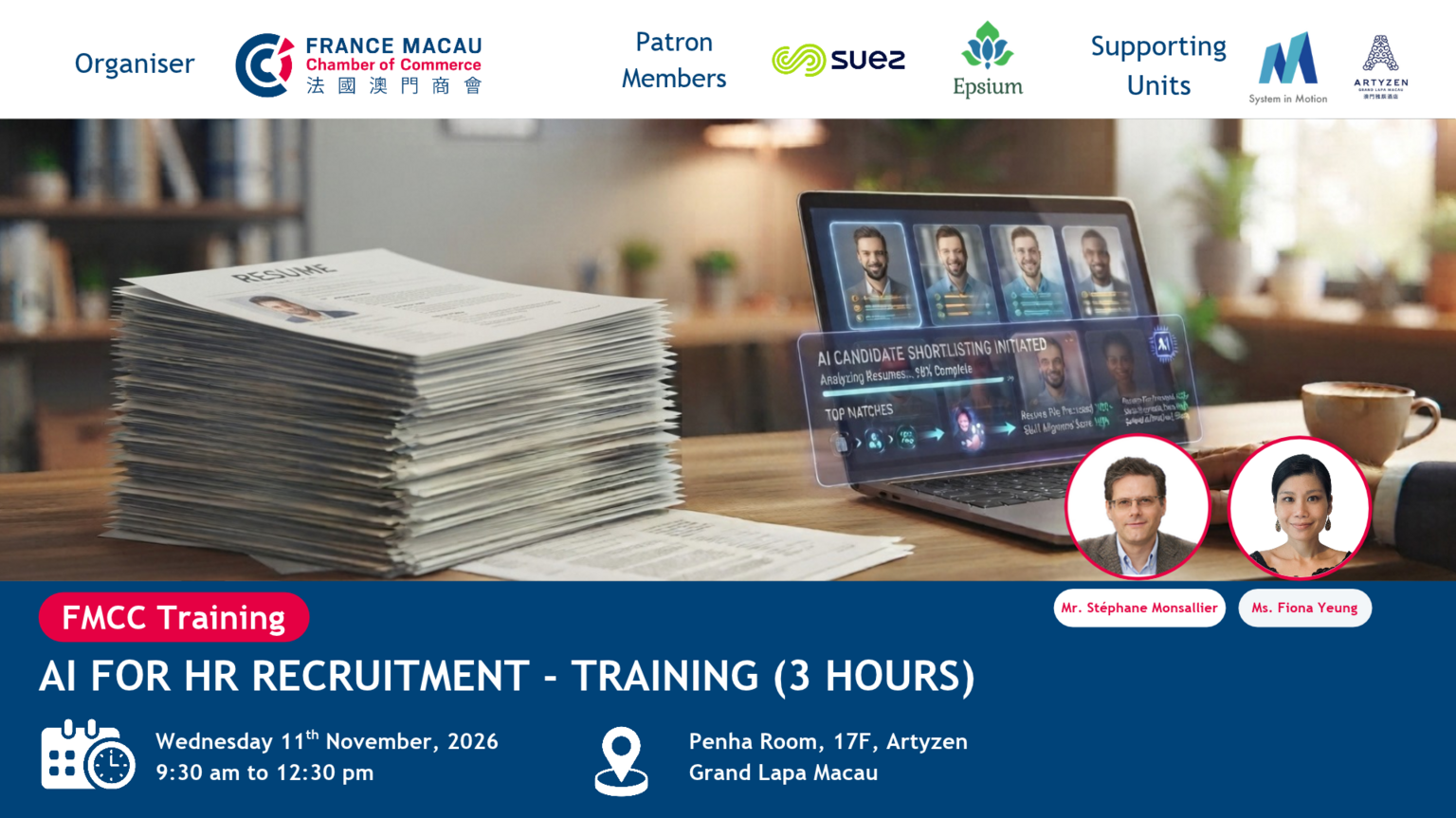
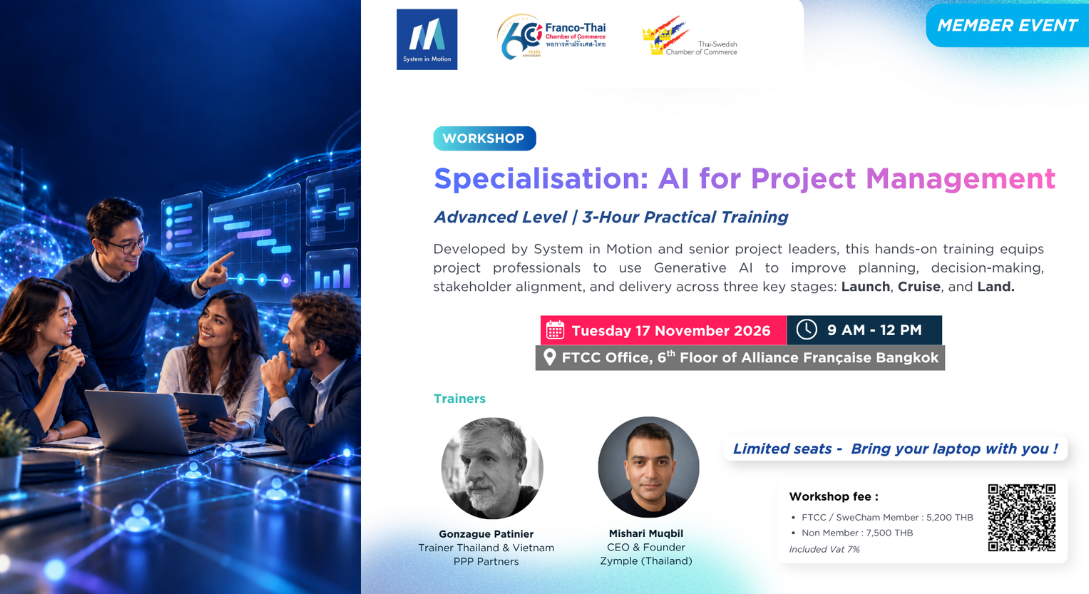
- Discover Our “AI Training Near You”: Move from theory to your own tailored pipeline of high-impact use cases, in your city.
- Continue the Series: In our next post, we address the critical question of opening the minds: “How to Unlock the 1,000 Use Cases You’re Not Seeing.”
FAQ: Executive Strategy Questions on AI Adoption
Q1: What is the biggest barrier to AI adoption in established companies? A: The biggest barrier to AI adoption is not the technology or the investment—it is human fear of the unknown. Even with licenses, tools, and tutorials available, employees often avoid AI due to unspoken apprehension, creating a silent friction that stalls promising initiatives before they begin. [1]
Q2: What should the first objective of a corporate AI training program be? A: The first and most critical objective of any serious AI training program is to systematically eliminate the fear of AI—not to teach a specific prompt or platform. Before automating any process, companies must first empower the people who own it, replacing uncertainty with clarity and anxiety with agency. [1]
Q3: Why are employees afraid of AI in the workplace? A: Employee fear of AI typically takes five forms: displacement fear (“Will AI make my role redundant?”), error fear (“Will I be blamed for AI mistakes?”), control fear (“How can I trust a black box?”), competence fear (“Does using AI undermine my expertise?”), and ethical fear (“Are we compromising data privacy or introducing bias?”). All stem from a single root cause: fear of the unknown. [1]
Q4: Will AI replace human workers? A: No. AI is a collaborator, not a replacement. Just as spreadsheets liberated accountants to focus on strategic analysis, and CAD empowered engineers rather than replacing them, AI handles volume—processing data, identifying patterns, drafting content—while humans provide judgment, contextual wisdom, ethical reasoning, creativity, and strategic vision. [1]
Q5: How can executives overcome employee resistance to AI? A: Executives overcome AI resistance through expert-led training built on four mechanisms: demystification (clear foundational knowledge), hands-on practice in a safe sandbox environment, official leadership endorsement, and mastering critical guardrails such as Human-in-the-Loop and human accountability. [1]
Q6: Why is demystifying AI essential before deploying AI tools? A: Fear dissolves when AI is explained in clear, accessible terms. When a professional learns that a large language model generates text by predicting the statistically most likely next word—rather than possessing “ideas”—AI ceases to be magic and becomes a manageable technology that can be engaged rationally rather than emotionally. [1]
Q7: What is a safe AI sandbox training environment, and why does it matter? A: A sandbox is a controlled, consequence-free training environment where employees can experiment with AI, ask “stupid” questions, test deliberately poor prompts, and learn through failure—without risking live customer data or critical financial models. This supervised practice builds the confidence that AI experimentation leads to discovery, not disaster. [1]
Q8: How does leadership endorsement affect AI adoption success? A: Investing in formal, expert-led AI training sends an unambiguous signal that AI is a sanctioned, prioritized corporate strategy—not unofficial experimentation. This removes personal risk from exploration, legitimizes the learning curve, fosters open inquiry, and aligns the entire organization around a shared, forward-looking goal. [1]
Q9: What is Human-in-the-Loop (HITL) in AI? A: Human-in-the-Loop is a framework where AI suggests, drafts, analyzes, and summarizes, while the human expert reviews, judges, contextualizes, edits, and makes the final decision. The AI is the powerful draft horse; the professional is the skilled driver holding the reins, setting direction, and applying the brakes. [1]
Q10: Who is accountable when AI makes a mistake? A: Ultimate accountability always stays with the human. AI is a tool, like a calculator or spreadsheet—if an AI-generated output is flawed, the professional using it remains responsible. This principle is empowering: it positions the human as the final quality control, leveraging a powerful assistant to achieve better results faster. [1]
Q11: What happens if a company automates before addressing employee fear of AI? A: Companies that skip the fear-elimination step end up with costly, underutilized software licenses, organizational friction, resistance, and stalled initiatives. For established companies where institutional knowledge and operational stability are paramount, bypassing the human element virtually guarantees failure. [1]
Q12: What makes an enterprise AI training program effective? A: Effective AI training combines dense, detailed, and valuable content; jargon-free foundational explanations; supervised hands-on practice; function-specific scenarios; and non-negotiable ethical guardrails. This layered approach systematically replaces fear with competence and caution with confident control. [1]
Q13: Should AI training be tailored by business function? A: Yes. Professionals in Marketing, Finance, HR, Operations, and Legal face distinct use cases, risks, and compliance requirements. Function-specific AI training connects capabilities to each team’s real workflows, building relevant, lasting confidence from the ground up. [1]
Q14: How does a company move from AI apprehension to AI transformation? A: The journey progresses through a structured, expert-led approach: first replacing uncertainty with understanding, then building hands-on confidence in safe environments, then establishing accountability frameworks. Once employees move from “Can I use this?” to “How can I use this to excel at my job?”, automation, integration, and strategic transformation become not only possible but inevitable. [1]
Q15: How can System in Motion help established companies adopt AI? A: System in Motion empowers established companies with AI mastery through high-quality, function-specific training (Marketing, Finance, HR, Operations, Legal), proven case studies, secure AI infrastructure deployment, workflow-based AI agents, and tailored integration with legacy systems. The foundational step is expert-led training that builds team confidence—available through workshops and “AI Training Near You” sessions. [1]
Ready to empower your team with the Confidence to use AI?
- Discover Our “AI Training Near You”: Move from theory to your own tailored pipeline of high-impact use cases, in your city.
- Continue the Series: In our next post, we address the critical question of opening the minds: “How to Unlock the 1,000 Use Cases You’re Not Seeing.”
We are Here to Empower
At System in Motion, we are on a mission to empower as many knowledge workers as possible. To start or continue your GenAI journey.
Let's start and accelerate your digitalization
One step at a time, we can start your AI journey today, by building the foundation of your future performance.
Book a Training