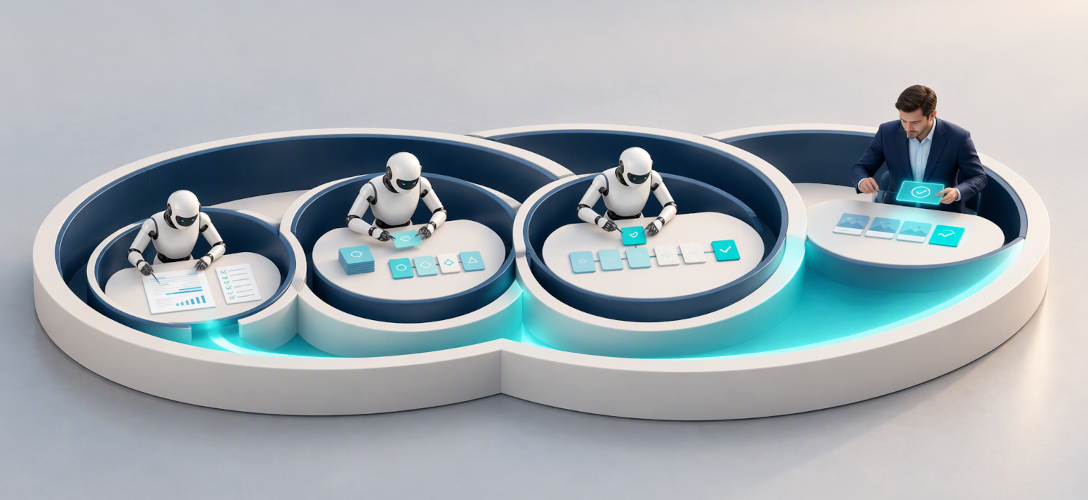
Why Your Grand Vision is Your Biggest Risk

Why Your Grand Vision is Your Biggest Risk
The Allure and The Abyss: The Executive’s AI Dilemma
You feel the pressure. Headlines scream of AI reshaping industries overnight. Your board is asking for the plan. Your competitors are announcing initiatives. The mandate is clear: Do AI, or be left behind.
In this climate, the appeal of the ambitious, “big bang” project is undeniable. It promises the narrative you crave: a bold, ROI-driven initiative that redefines your value chain and positions you as a leader. You envision the strategic offsite where you unveil the multi-year roadmap to disrupt your own industry—a concept we’ve explored as Radical Innovation . It’s a compelling vision, and it is, in time, the right goal.
But here is the critical, counterintuitive truth for the established enterprise: That grand vision is the single most dangerous place to start.
As leaders in AI education and integration, we’ve seen the pattern repeat. These initial moonshots, laden with ambition, become quagmires. They confront too many unknowns at once: unproven model capabilities, unprepared data landscapes, unaligned team mindsets, and untested process changes. They aim for a distant horizon while ignoring the complex terrain underfoot. The result is not transformation, but paralysis—a costly, demoralizing project that yields no tangible value, no clear learnings, and a reinforced skepticism that “AI just doesn’t work for us.”
The dilemma is not whether to aim high. It is where to begin. And for the company seeking true, sustainable mastery, the only logical first step is not the project with the biggest potential return, but the one with the guaranteed success. Your initial victory must be engineered, not just imagined.
The “Flashy Project” Failure Formula
Let’s deconstruct why the ambitious first project is a near-certain path to disillusionment. It’s not a failure of technology, but of human and organizational dynamics. These initiatives typically fall victim to a predictable, three-part failure formula.
The Complexity Quagmire: Chasing Too Many Unknowns
A large-scale AI project is not a single challenge; it’s a cascade of interdependent ones. You must solve for data readiness, model selection and its inherent flaws, process redesign, and integration with legacy systems, all simultaneously. Each variable is a potential point of failure. Attempting to solve this multi-dimensional puzzle as a first foray creates a state of analysis paralysis or, worse, frantic action without a stable foundation. The project becomes a research experiment, not a deliverable.
The Change Management Blind Spot: Ignoring the Human Element
Amidst the focus on algorithms and infrastructure, the most critical component is often forgotten: your people. In most established organizations, a latent fear of AI coexists with excitement. Will it replace jobs? Create more work? Be impossible to use? A “big bang” project, announced from the top, amplifies this fear. It triggers resistance, passive or active, from the very teams whose buy-in is essential for success. You cannot automate a process that people are unwilling to change.
The Learning Paradox: Chaos or Nothing
A failed large project yields one of two destructive “learnings.” Either it produces no usable insights, just a costly conclusion that “it didn’t work,” leaving you with nothing to build upon. Or, it generates a tangled web of chaotic, conflicting data points from across too many fronts, making it impossible to synthesize a coherent, actionable roadmap. You’re left with fragments of failure, not a foundation for the next step.
This formula leads to the most common and damaging outcome: a prolonged investment of time and capital that erodes executive confidence and team morale, cementing the belief that AI is a hype-driven distraction. It’s the opposite of transformation; it’s institutional scar tissue that makes the next attempt even harder.
The Winning Formula: A Guaranteed First Step
If the grand vision is the wrong starting line, where should an established company begin? The strategic pivot is not to lower your ambition, but to redefine the initial objective.
Goal Adjustment
The goal of your first AI project is not to disrupt your industry. The goal is to guarantee a success.
This is the cornerstone of our method at System in Motion. We engineer the first win to build the three essential pillars for all future transformation: Trust, Momentum, and Practical Knowledge.
Forget the multi-million dollar ROI for a moment. Consider, instead, the “5-Minute Revolution.” Is saving five minutes per employee, per day, on a routine, low-value task a justifiable return on an AI investment?
Let’s reframe the question by examining the realistic alternatives over the same 6-12 month horizon:
- Do Nothing: A conscious decision to cede ground and fall behind.
- The 6-Month Moonshot That Goes Nowhere: A net loss of capital, time, and organizational confidence.
- The “Learning” Project That Teaches Too Much: A paralyzing overload of unstructured insights with no clear path forward.
Compared to these costly outcomes, the “5-minute” win is not just viable; it is strategically superior.
The Real ROI of the First Win
The true calculation is not just time saved. It is: (5 Minutes Saved) x (Employee Motivation & Growth) x (The Unleashed Potential of a Proven Path).
That first, small success does more than optimize a task. It creates a team of advocates. It delivers a tangible, working artifact that proves, “AI works here, for us.” It demystifies the technology and builds the internal confidence to ask the pivotal question: “What’s next?”
This is the compound interest of transformation. The value isn’t just in the minutes; it’s in the ripple effect of proof and enthusiasm that travels through the unofficial channels of your company, building a groundswell of demand that no top-down mandate could ever achieve. You are not just solving a small problem; you are lighting the fuse for scalable change.
Our Method: Engineering the First Win
How do you systematically engineer this critical first victory? It requires a methodology that prioritizes clarity, security, and tangible impact over technological novelty. This is our proven, four-part framework for established companies.
Build Foundational Clarity, Not Buzz
We begin not with a project charter, but with dense, function-specific training. Generic AI awareness is useless. Your marketing, finance, HR, and operations leaders need to understand the precise capabilities and limitations of AI for their workflows. This educative foundation transforms anxiety into informed opportunity, allowing teams to identify their own “5-minute” problems—the realistic, high-frequency tasks ripe for automation. It turns your people from subjects of change into architects of it.
Secure the Ground, Then Build
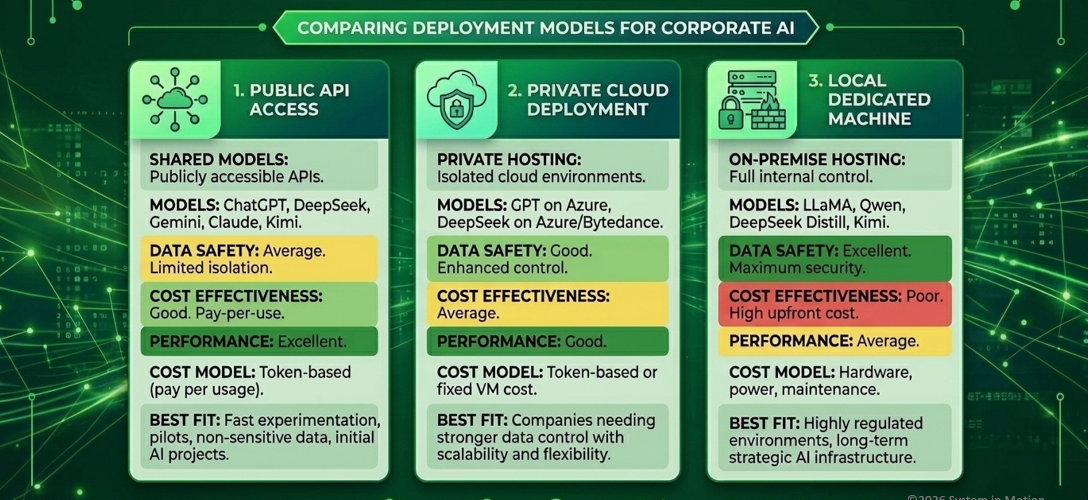
For an established enterprise, security and reliability are non-negotiable. That’s why our first technical step is deploying a secured, managed AI infrastructure. This provides a controlled, safe environment for experimentation, ensuring governance, data privacy, and compliance are baked in from day one. You cannot have a successful first step if it creates a security incident or technical debt. We build the runway before taxiing the plane.
Deploy a Workflow Agent, Not a Lab Experiment
The first deployment is not a custom-built model chasing a vague goal. It is a targeted, workflow-based AI Agent designed to fully automate one specific, low-value task. Think automated meeting note synthesis, invoice data extraction, or HR policy Q&A. The outcome is not a prototype or a report; it is a live tool that removes a daily friction point for a real team. This creates immediate, visible relief and delivers the concrete proof point that fuels advocacy.
Integrate with Legacy, Don’t Attack It
We tailor this integration to work seamlessly within your existing technology ecosystem. The goal is to prove AI is a seamless enhancer of your proven processes and legacy systems, not a disruptive replacement. This demonstrates that transformation is evolutionary, not revolutionary, dramatically reducing resistance and increasing adoption.
The output of this method is not just a working tool. It is a catalytic event. You create a team of empowered users who experience the benefit directly. They become your most credible champions, spreading demand through peer networks. You generate a clean, actionable data point of success from which to plan the logical, confident next step. You replace the “big bang” gamble with a virtuous cycle of proven value.
Conclusion: Mastery is a Journey, Not a Launch
The path to AI mastery for an established company does not begin with a single, disruptive leap. That is the destination. The journey begins with a single, deliberate, and guaranteed step.
Chasing the flashy project or the complex agent initiative as a first move is not a display of leadership ambition; it is an operational risk. It gambles your organization’s confidence, capital, and momentum on too many unknowns. True leadership in the AI era is demonstrated by the wisdom to choose the proven path of momentum—where quality, trust, and incremental, tangible transformation compound into unstoppable force.
We have seen this pattern unlock the potential in companies like yours. The “5-minute” win ignites a chain reaction. It transforms skepticism into curiosity, fear into participation, and isolated projects into a coherent, company-wide roadmap. It builds the muscle memory for change, proving that AI is not a distant, disruptive threat, but a practical, powerful tool already at work within your walls.
The most powerful AI transformation does not begin with a bang, but with a perfectly executed, strategic whisper—a success so undeniable that its echo becomes the roar of your company’s new future.
Stop planning for a distant, uncertain AI horizon. Start building it. Let’s define and engineer your guaranteed first success together.
Ready to transform cautious exploration into undeniable momentum? Contact our experts to architect your first, guaranteed AI victory.
FAQ: Most Common Questions
Q1: Why should an established company avoid starting its AI journey with a grand, ambitious project?
A: Starting with a grand “moonshot” project is the most dangerous move because it confronts too many unknowns at once, untested models, unprepared data, unaligned teams, and legacy integration issues. This often leads to paralysis, wasted resources, and reinforced skepticism. The smarter strategic start is a guaranteed, small win that builds trust, momentum, and practical knowledge.
Q2: What is the “5-Minute Revolution” and why is it strategically superior to a high-ROI moonshot?
A: The “5-Minute Revolution” is saving just five minutes per employee per day on a low-value routine task. Compared to a 6–12 month moonshot that may go nowhere, this small win delivers tangible proof that “AI works here.” Its real ROI is not just time saved—it ignites employee motivation, creates advocates, and builds the confidence to scale.
Q3: How does a failed big-bang AI project damage an organization beyond wasted capital?
A: A failed large project either yields no usable insights (“it doesn’t work”) or produces chaotic, conflicting data points impossible to synthesize. It erodes executive confidence, demoralizes teams, and creates institutional scar tissue that makes future AI attempts even harder.
Q4: What are the three predictable elements of the “Flashy Project Failure Formula”?
A: 1) Complexity Quagmire – too many interdependent unknowns (data, model, process, integration). 2) Change Management Blind Spot – ignoring human resistance and fear. 3) Learning Paradox – either no insights or chaotic, unusable data. Together they prevent coherent learning and stall transformation.
Q5: How should an established company redefine the objective of its first AI project?
A: The goal must shift from “disrupting the industry” to “guaranteeing a success.” The first project is not about maximum ROI—it is about building the three pillars for future transformation: Trust, Momentum, and Practical Knowledge. Every subsequent initiative builds on that foundation.
Q6: What is the real return on investment (ROI) of a guaranteed first AI win?
A: The true ROI is (5 Minutes Saved) × (Employee Motivation & Growth) × (The Unleashed Potential of a Proven Path). The compound effect of proof and enthusiasm spreads through peer networks, creating groundswell demand that no top-down mandate can achieve.
Q7: Why is function-specific AI training critical before starting any AI project?
A: Generic AI awareness is useless. Dense, tailored training for marketing, finance, HR, and operations transforms anxiety into informed opportunity. It allows teams to identify their own realistic, high-frequency “5-minute” problems and turns employees from subjects of change into architects of it.
Q8: What role does a secured AI infrastructure play in the first win strategy?
A: Security and reliability are non-negotiable for established companies. Deploying a managed, secure AI environment ensures governance, data privacy, and compliance from day one. It prevents technical debt and security incidents, providing a safe sandbox for experimentation.
Q9: What is the practical deployment step after building clarity and security?
A: Deploy a targeted, workflow-based AI Agent that fully automates one specific low-value task—such as meeting note synthesis, invoice data extraction, or HR policy Q&A. This is not a prototype; it’s a live tool that removes daily friction and delivers immediate, visible relief.
Q10: How should AI integrate with existing legacy systems to avoid resistance?
A: Integration must be tailored to work seamlessly within the company’s current technology ecosystem. The goal is to prove AI is a seamless enhancer of proven processes, not a disruptive replacement. This evolutionary approach reduces resistance and accelerates adoption.
Q11: What is the “catalytic event” produced by a successful first AI project?
A: The first win creates a team of empowered users who directly experience the benefit. They become credible champions, spreading demand through peer networks. The project generates a clean, actionable data point from which to plan the confident next step—replacing a “big bang” gamble with a virtuous cycle of proven value.
Q12: How does the “guaranteed first step” method handle change management and employee fear?
A: By starting with a small, visible success that threatens no one’s job and solves a real pain point, fear is replaced with curiosity. The method builds trust from the bottom up, turning passive resistance into active advocacy. It demystifies AI and lets employees see it as a practical helper.
Q13: What are the realistic alternatives to a guaranteed first AI win, and which is worst?
A: The three alternatives over 6–12 months are: 1) Do nothing (cede ground). 2) The 6-month moonshot that goes nowhere (net loss). 3) The “learning” project that teaches too much (paralyzing overload). The worst is the moonshot because it consumes capital and organizational confidence without deliverable progress.
Q14: How should an executive measure success of the first AI project if not by large financial returns?
A: Measure success by three non-financial metrics: 1) Improved employee motivation and growth (e.g., engagement with AI). 2) Increased internal demand for additional AI solutions. 3) Clarity and actionable insights gained from the project. These build the momentum and knowledge needed for larger ROI-driven projects later.
Q15: What is the single most important takeaway for an executive planning an AI strategy?
A: The path to AI mastery does not begin with a disruptive leap; it begins with a deliberate, guaranteed step. Chase a proven win, not a flashy project. True leadership is choosing the roadmap of trustworthy, incremental transformation that compounds into unstoppable force. Stop planning for a distant horizon—start building the first success today.
Ready to transform cautious exploration into undeniable momentum? Contact our experts to architect your first, guaranteed AI victory.
We are Here to Empower
At System in Motion, we are on a mission to empower as many knowledge workers as possible. To start or continue your GenAI journey.

Let's start and accelerate your digitalization
One step at a time, we can start your AI journey today, by building the foundation of your future performance.
Book a Training